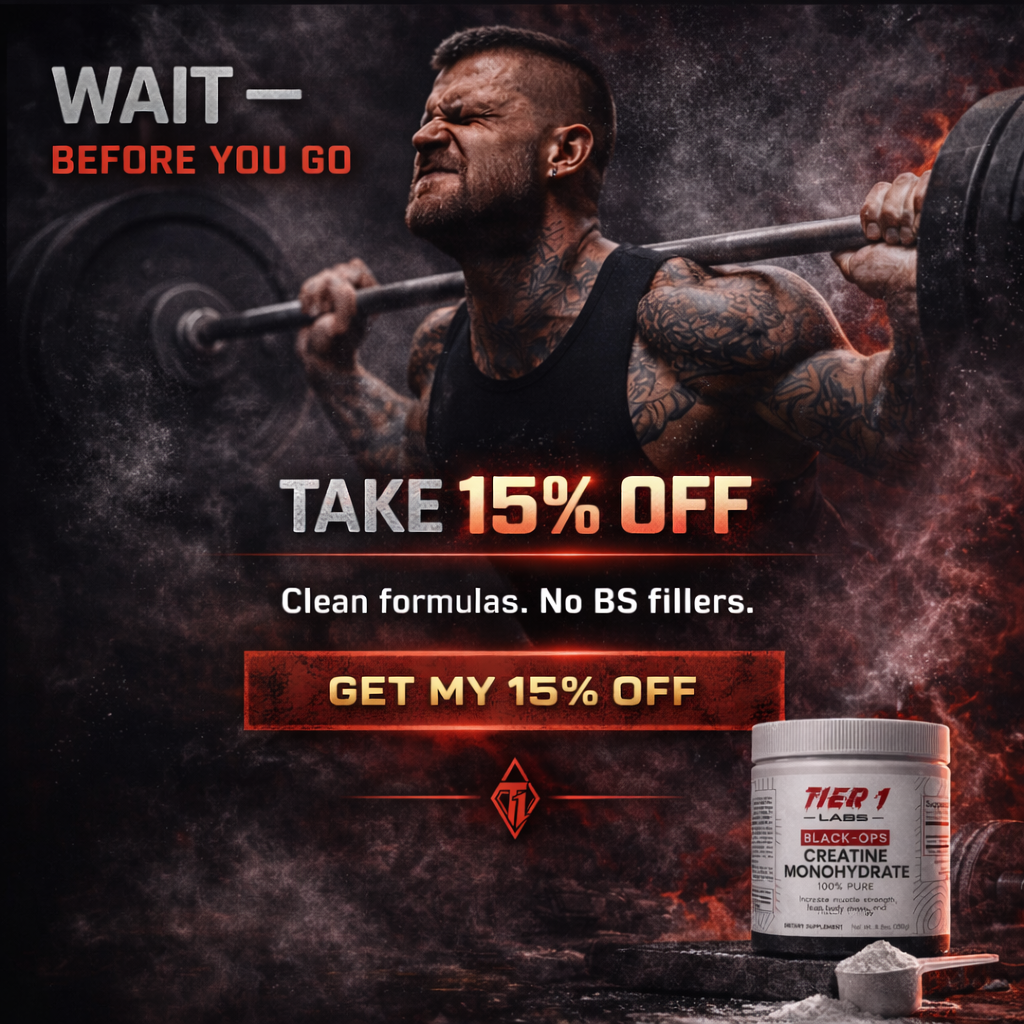


If there were a single supplement that consistently delivered strength, power, endurance, and cognitive benefits, it would be creatine.
Yet despite being one of the most researched supplements in sports science, creatine is still surrounded by myths and misunderstanding.
Let’s break down what creatine actually does, what the science says, and why it remains a foundational supplement for athletes, first responders, military personnel, and anyone serious about performance.
What Is Creatine?
Creatine is a naturally occurring compound found in muscle cells. Your body produces it from amino acids and you also get small amounts from foods like red meat and fish.
Its primary role is simple but powerful:
Creatine helps your body produce ATP (adenosine triphosphate), which is the primary energy currency of your cells.
When ATP is rapidly depleted during intense activity—like sprinting, lifting, or combat sports—creatine helps replenish that energy faster, allowing your muscles to continue producing force.
This is why creatine is especially effective for:
• Weight training
• Sprinting
• Explosive athletic performance
• High intensity tactical activity
Proven Benefits of Creatine
Creatine isn’t hype. It’s one of the most scientifically validated supplements ever studied.
Here are the key benefits supported by research.
1. Increased Strength and Power
Creatine increases the body’s ability to produce energy during high-intensity exercise.
This leads to measurable improvements in:
• Max strength
• Explosive power
• Training volume
• Sprint performance
Studies consistently show creatine users gain more strength and muscle over time compared to non-users.
2. Enhanced Muscle Growth
Creatine helps muscles grow in multiple ways:
• Increases training intensity
• Improves recovery between sets
• Increases cellular hydration
• Supports anabolic signaling
Over time, this leads to greater lean muscle mass and improved body composition.
3. Improved Recovery
Creatine has been shown to help reduce:
• Muscle cell damage
• Inflammation markers
• Recovery time between training sessions
For athletes and tactical professionals who train frequently, this means more productive sessions and faster bounce-back.
4. Better Brain Performance
Creatine isn't just for muscles.
Your brain also relies heavily on ATP energy systems.
Research shows creatine may support:
• Mental clarity
• Cognitive processing
• Reduced mental fatigue
• Focus under stress
This is particularly valuable for high pressure professions like law enforcement, military, and first responders.
5. Increased Work Capacity
Creatine allows you to do more work before fatigue sets in.
This means:
• More reps
• More sets
• Higher output during training
Over time, this increased workload leads directly to greater physical adaptation and progress.
Creatine Myths (Debunked)
Despite decades of research, several myths still circulate online.
Let’s clear them up.
Myth 1: Creatine Damages Kidneys
This myth has been heavily studied and consistently disproven in healthy individuals.
Research shows creatine supplementation is safe for long-term use when taken at recommended doses.
The confusion often comes from the fact that creatine can slightly increase creatinine levels, which is simply a metabolic byproduct—not kidney damage.
Myth 2: Creatine Is a Steroid
Creatine is not a hormone and not a steroid.
It is a naturally occurring compound found in the body and in everyday foods.
Myth 3: Creatine Causes Excessive Water Retention
Creatine does increase intracellular hydration, meaning water is pulled into muscle cells.
This is actually beneficial and contributes to:
• Muscle fullness
• Cellular health
• Improved training performance
It does not cause bloating or fat gain.
Myth 4: You Need to “Cycle” Creatine
There is no scientific requirement to cycle creatine.
It can be safely taken daily year-round.
How to Take Creatine
The most effective and widely studied form is:
Creatine Monohydrate
Recommended intake:
Daily Maintenance Dose
3–5 grams per day
Optional loading phase:
20g per day (split into 4 doses) for 5–7 days, followed by 5g daily.
However, loading is not required. Consistent daily intake will fully saturate muscles over time.
Who Should Use Creatine?
Creatine is beneficial for a wide range of individuals:
Strength athletes
Powerlifters, bodybuilders, CrossFit athletes.
Endurance athletes
Improves power output and recovery.
First responders & military
Supports strength, mental clarity, and resilience under stress.
General fitness
Anyone looking to improve strength, muscle, and performance.
Creatine and Tactical Performance
For individuals operating in high stress, high demand environments, creatine provides unique advantages.
Improved:
• Physical power
• Recovery under heavy workloads
• Cognitive endurance
• Resistance to fatigue
This makes creatine one of the most valuable supplements for LEO, military personnel, and tactical athletes.
Final Thoughts
Creatine remains one of the most effective, safest, and most studied supplements in the world.
Its benefits extend far beyond muscle building.
Creatine supports:
• Strength
• Power
• Recovery
• Mental performance
• Overall physical resilience
For anyone serious about training, performance, and longevity, creatine isn’t optional.
It’s foundational.